
How Has Virtual Learning Impacted Students? Texas Is Looking To Find Out
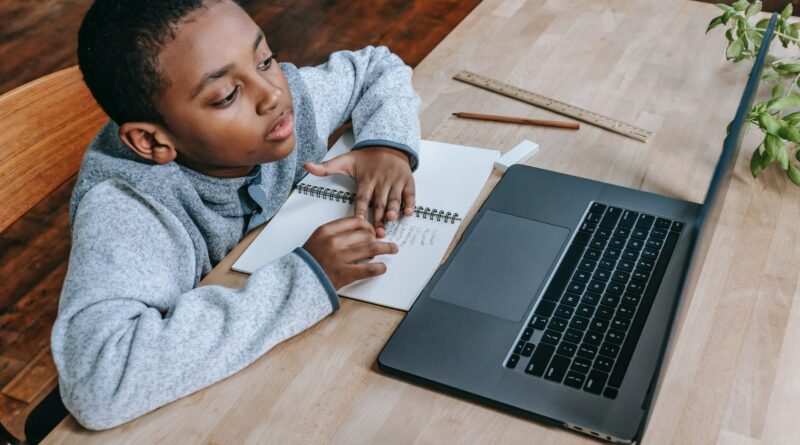
We’ve spoken a lot about educational practices during the pandemic but still researchers know almost nothing about the impacts of virtual learning. During the COVID-19 pandemic, states had to take preventive and mitigation measures to keep residents safe. These obviously included things like lockdown measures, safety requirements, and imposing virtual or distance learning education. In many places all over the country, schools are either in mixed online-virtual situations or fully virtual. But what impact is virtual learning vs. in-person learning having on students?
This question posed by $8 million grant awarded to Texas A&M will need answering
Also, we have education-related grants are listed on GrantWatch.com, so you can gain funding for similar initiatives.
Let’s Talk About Virtual Learning: Education Amidst A Pandemic
In areas where certain types of education aren’t available, students in rural areas may benefit from online learning. But combined with full lockdowns, lack of access to extended family and friends, it may be an entirely different situation. There may be other limitations with this type of learning. There may be benefits.
However, this $8 million grant award will allow Virtually-Infused Collaborations for Teaching and Learning Opportunities for Rural Youth to conduct this first-of-it’s-kind experiment. This team comes out of Texas A&M’s Educational Leadership Research Center.
Texas A&M Educational Leadership Research Center Director Beverly Irby spoke on the grant award, saying:
“As we looked at the information that’s out there in the research literature, we could not find any real studies that had been done in a controlled environment or with a randomized controlled study, Right now with the pandemic, we have had a very uncontrolled situation.
For these teams to see these two education methods’ ultimate effectiveness, the research team will work with 3rd-5th grade students. The program utilizes a “literacy infused science curriculum.” The project will recruit 1500 students and 500 teachers. The researchers will follow them through three years of schooling to monitor their science-literary progress.
Teachers in this program will be assigned at random to either
a) face-to-face in-school instruction plan at a school
or
b) virtual-classroom where students will learn at home with their family’s help.
Can This Project Change The Way We Understand Learning?
Research Scientist Cindy Guerrero, spoke on this project as well: “We also provide virtual mentoring and coaching where we go into the classroom,” Guerrero said. “We provide real-time live feedback with the teachers, so we can tell them at the moment, ‘Hey, you’re doing a great job,’ or ‘You may not notice, but let’s address this in this way using this strategy.’”
According to this research team, students in this 3rd-5th grade are at a critical juncture period in their educational development. According to Dr. Irby, if students are not exposed to STEM subjects by grade 5, interest in those subjects wanes. Therefore it’s absolutely critical to study the impacts of different types of learning in this age group.
This could give a better understanding to students, parents, and educators on how best to address learning modalities.
Bilingual ESL Professor Fuhui Tong explains this. “In early grades, we’re talking about learning to read, then transition to reading to learn. Starting from 3rd, 4th, and 5th grade, that is the transitioning period,” Tong said. “It doesn’t happen overnight, but given quality instruction, rigorous research, and experimentation, we will be able to see that difference.”
Understanding The Impacts Of Where And How Students Learn:
Rural-based students are the focus of this project. The cooperation of 77 rural schools in Texas helped to get this grant. This study could allow for educators to transform education overall but with an emphasis on rural education. The hope is that this research can go beyond the pandemic to have a real impact on the education system.
At GrantWatch we understand the power of education. An educator founded GrantWatch. We understand that students, parents, and teachers work together to improve education. That’s why initiatives and research like this project are critical. And it’s also why we list elementary education grants on our website.
Have questions about this grant category? Other GrantWatch questions? Feel free to reach out to our incredible customer service team at 561-249-4129!
About GrantWatch
A trusted resource since 2010. For more than 16 years, GrantWatch has helped nonprofits, small businesses, schools, government agencies, and individuals discover funding opportunities and navigate the grant process with confidence. Thousands of organizations rely on GrantWatch's extensive database of verified grants and funding resources to identify opportunities and secure support for meaningful projects.
Today, GrantWatch supports organizations across the full grant lifecycle through a single, streamlined platform. In addition to access to more than 11,000 active, verified, and human-curated grant opportunities, the platform includes a centralized Dashboard that serves as the command center for the GrantWatch Full Grant Lifecycle Platform, giving users a centralized view of opportunities, deadlines, research, and workflow activity across the 12-stage Grant Pipeline. Users also benefit from integrated tools including the AI Grant Finder, AI Grant Writing Tool, My Grant Calendar, Grant Alerts, Foundation Search, and Awarded Grant Search, helping move funding efforts from discovery to award and measurable impact.
GrantWatch, founded by Libby Hikind, is the author of The Queen of Grants series, including The Queen of Grants series: The Queen of Grants: From Teacher to Grant Writer to CEO and The Queen of Grants 2: GrantTalk Secrets for the New Era of Writing. Drawing on decades of experience in the grants industry, GrantWatch was created to simplify how organizations discover, evaluate, and pursue funding opportunities.