
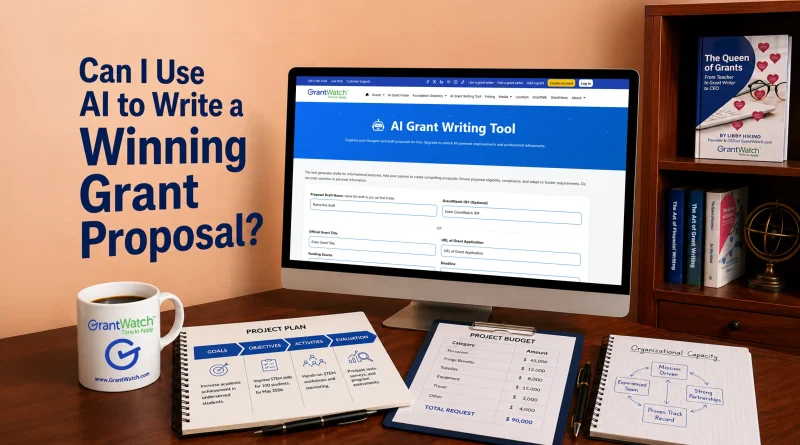
Can I Use AI to Write a Winning Grant Proposal?
Our customer service grant experts are constantly fielding questions about the process and one of the questions trending with subscriber right now is: Can I use AI to write a grant proposal? Artificial intelligence is everywhere right now. It writes emails, summarizes meetings, generates images, organizes schedules, and occasionally behaves like an over-caffeinated intern with unlimited keyboard access.
The short answer is yes.
AI can absolutely assist with grant writing. In fact, it can save time, improve organization, generate ideas, and help applicants overcome writer’s block. But there is an important catch. AI works best as a tool, not a replacement for strategy, human insight, and authentic storytelling. Successful grant proposals still require clear goals, accurate information, and a strong understanding of the funder’s priorities.
So naturally, many nonprofits, businesses, and organizations are asking the same question.
Grant seekers looking for funding opportunities find benefit from using AI alongside a trusted grant database like GrantWatch, where more than 11,000 active grants are currently available, helping applicants identify opportunities that align with their mission, goals, and eligibility. The best part? There is a brand new AI Grant Writing Tool on the GrantWatch database that can help!
What Can AI Do Well?
Grant writing involves a surprising amount of repetitive work. Applicants often need to draft organizational summaries, describe programs, explain community needs, create timelines, and polish language for readability. This is where AI can become extremely useful.
AI tools can help:
- Generate outline
- Generate first drafts
- Improve grammar and clarity
- Rewrite sections for stronger flow
- Summarize complex information
- Brainstorm project ideas
- Organize proposal sections
- Create outlines and templates
- Save time on repetitive writing tasks
- Edit and revision
For organizations with limited staff or tight deadlines, AI can act like a digital brainstorming partner that never asks for coffee breaks. It can also help newer grant seekers feel less intimidated by the writing process.
What AI Cannot Do Well
While AI can speed up the writing process, it has limitations. AI does not personally know your organization, your community, or your mission. It cannot replace firsthand experience, relationships, or program knowledge. Grant reviewers often look for authenticity and specificity. Generic language filled with buzzwords can weaken an application instead of strengthening it.
- Include inaccurate information
- Sound repetitive or overly formal
- Miss critical eligibility requirements
- Fail to address the funder’s priorities
- Create vague or generic responses
That is why human review remains essential. And it should be noted that there are funders who will not review applications written solely by AI. Perhaps Libby Hikind said it best in her latest book, The Queen of Grants 2: GrantTalk Secrets for the New Era of Writing, “The GrantWatch AI Grant Writing Tool is not here to replace you; it’s here to lift you up, help you submit stronger applications, and give you the edge in a competitive world.
That’s the power we’re building together at GrantWatch. Tools that honor the human heart of grant writing while harnessing AI to make the process calmer, faster, and more doable.”
The strongest proposals combine AI efficiency with human expertise. Think of AI as a drafting assistant holding a flashlight, not the architect designing the entire building.
Why Does Personalization Matter?
Every grant funder has unique goals and priorities. Some focus on measurable outcomes. Others emphasize innovation, collaboration, underserved communities, sustainability, or long-term impact. A successful proposal directly connects the applicant’s mission to the funder’s objectives. This requires personalization.
Organizations should always customize AI-generated content to reflect:
- Real program details
- Accurate budgets
- Local community needs
- Organizational voice
- Specific outcomes and goals
- Funders’ stated priorities
Reviewers can often recognize proposals that feel mass-produced. A proposal that sounds human, focused, and mission-driven typically stands out more effectively.
AI Grant Writing Tools Continue to Grow
As AI technology evolves, grant writing platforms are beginning to integrate smarter tools designed specifically for grant seekers.
For example, GrantWatch offers an AI Grant Writer feature that helps users streamline the proposal-writing process. The tool is designed to assist applicants with drafting content, organizing ideas, and creating stronger grant narratives based on their funding goals.
Instead of staring at a blinking cursor while your deadline marches closer like a tiny parade drum, AI-assisted tools can help users move from idea to draft much faster.
Features like these can be especially helpful for:
- Small nonprofits
- First-time grant seekers
- Busy organizations with limited staff
- Entrepreneurs applying for funding
- Community groups managing multiple applications
AI tools are not a substitute for careful planning and editing, but they can dramatically reduce the time needed to create a solid starting point.
Best Practices for Using AI in Grant Proposals
Organizations using AI for grant writing should approach the process thoughtfully.
Here are a few best practices:
1. Start with Clear Information
Provide accurate details about your organization, goals, programs, and funding needs before generating content. AI performs better when given strong information to work with.
2. Edit Everything Carefully
Never submit AI-generated text without reviewing it thoroughly. Check for accuracy, tone, grammar, and alignment with the grant requirements.
3. Customize Every Proposal
Avoid copying the same proposal into every application. Tailor responses to match each funder’s mission and priorities.
4. Protect Sensitive Information
Be cautious about entering confidential financial data, personal information, or sensitive organizational records into AI platforms.
5. Keep the Human Voice
The best proposals still sound authentic, compassionate, and mission-driven. AI can help organize the message, but real people give it meaning.
Key Take Aways
So, can you use AI to write a grant proposal? Absolutely. AI can help organizations save time, organize ideas, improve readability, and simplify the writing process. But successful grant proposals still rely on human insight, strategy, and personalization. The strongest applications combine technology with authentic storytelling and careful review.
Used wisely, AI becomes less of a shortcut and more of a launchpad, helping grant seekers spend less time wrestling with blank pages and more time focusing on the impact they hope to create.
About GrantWatch
Since 2010, GrantWatch has been a trusted grant management resource for grants for nonprofits, grants for small businesses, grants for schools, grants for government agencies, and grants for individuals. Discover grant funding opportunities and easily navigate the grant process. Thousands of organizations rely on this extensive grant database of human-verified grant funding resources to identify grant opportunities and secure support for meaningful projects.
Today, GrantWatch is the Full Grant Lifecycle Platform with GrantWatch Intelligence™, featuring a grant Dashboard and a 12-stage Grant Pipeline that spans everything from grant prospecting through post-award reporting. Alongside access to more than 11,000 active, human-curated, human-verified grant opportunities, the centralized Dashboard functions as the command center for the GrantWatch Full Grant Lifecycle Platform, giving users a unified view of opportunities, deadlines, research activity, and workflow progress across every stage of the 12-stage Grant Pipeline. Users also benefit from integrated tools including the AI Grant Finder, AI Grant Writing Tool, My Grant Calendar, Grant Alerts, Foundation Search, and Awarded Grant Search, moving funding efforts from discovery to award and measurable impact.
GrantWatch founder Libby Hikind is also the author of The Queen of Grants series, including The Queen of Grants series: The Queen of Grants: From Teacher to Grant Writer to CEO and The Queen of Grants 2: GrantTalk Secrets for the New Era of Writing.