
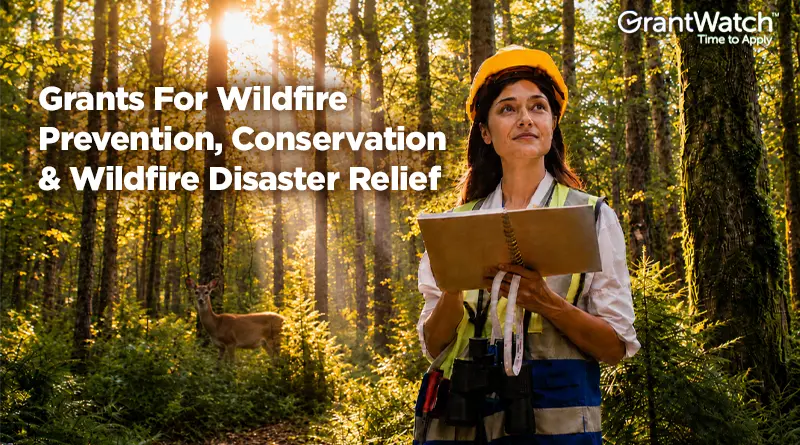
Grant for Wildfire Prevention, Conservation, and Wildfire Disaster Relief
Wildfires are a natural part of many ecosystems. They help renew forests, clear dead vegetation, and support ecological balance. However, climate change is increasing the frequency, size, and intensity of wildfires across the globe. This is where grant-based funding opens pathways for prevention and recovery.
As a result, communities face growing threats to homes, wildlife habitats, water supplies, and public health. The cost of prevention and remediation can be astronomical. Fortunately, grant funding can help. From wildfire prevention projects to disaster recovery efforts, grants provide resources to protect communities and strengthen environmental resilience.
GrantWatch features grants that support wildfire prevention, conservation initiatives, emergency response efforts, and post-disaster recovery. Subscribers can find them in the Disaster Relief grant category. Whether you’re a nonprofit, government agency, tribal organization, researcher, or homeowner, funding opportunities are available to help reduce wildfire risks.
Wildfire Prevention and Environmental Stewardship
In recent years, communities around the world have experienced larger and more destructive wildfire seasons. They alter soil quality, damage watersheds, reduce biodiversity, and release significant amounts of carbon into the atmosphere. In short, the environmental impacts can last for years after the flames are extinguished.
Because of these challenges, many grant programs support projects that:
- Improve wildfire preparedness
- Reduce hazardous fuels
- Restore damaged ecosystems
- Enhance forest health
- Develop fire management strategies
- Strengthen community resilience
These investments help communities prepare for future wildfire seasons while protecting natural resources for generations to come.
Wildfire Grant Solutions at GrantWatch
Emergency Wildfire Response
Grants are available for wildfire suppression and emergency response. Funding may support firefighting operations, protective measures, and administrative costs during active fire events.
Enhance Firefighting Capacity
Grants help fire departments improve training, upgrade equipment, and strengthen emergency response systems. They support rural and underserved communities in building fire protection capacity.
Disaster Relief Efforts
Nonprofits impacted by wildfire disasters may qualify for grants that address urgent needs, provide emergency services, and support community recovery.
Fire Department Respond to Fires
Grants to fire departments to respond to fires and disasters and offer assistance to victims. Funding is for equipment, supplies, maintenance, repairs, educational programs, and aid to fire victims.
Emergency Aid Drones
Opportunity for businesses to participate in a competition to create reliable drones for emergency deployment. Drones are expected to assist with remote rescue, water and ration delivery, and even douse a nascent wildfire.
Cooperative Agreements for Stewardship
Cooperative agreements for nonprofits in multiple states to give youth experience in natural resources management. Among the acceptable projects is wildfire risk reduction for communities, watersheds, and other public land ecosystems.
Emergency Wildfire Response
Funding is available for firefighting activities, emergency protective measures, and administrative expenses. Eligible fires located on publicly or privately owned forests or grasslands are eligible.
Enhance Disaster Preparedness
Federal and state funding opportunities support proactive mitigation projects designed to reduce the impact of future natural disasters, including wildfires.
Natural Disasters Recovery
Entrepreneurs and small business owners affected by wildfires and other disasters may access grants that help restore operations and recover from business interruptions.
Emergency Response and Fire Departments
Rolling grants to small-town fire departments and EMS to improve and enhance emergency response services. Funding is for equipment and tools.
Wildfire Prevention Tips
Preventing wildfires often starts with simple actions. According to the National Fire Protection Association (NFPA), proactive fire safety measures can significantly reduce the risk of accidental ignition. In addition, many grant opportunities are available to support wildfire prevention and conservation efforts in high-risk areas.
Campfires and Bonfires
Always build fires in designated locations. Never leave a fire unattended, and completely extinguish it before leaving. When possible, use enclosed fire pits to help contain sparks.
Yard Waste and Debris
Remove dry brush, leaves, and dead vegetation from your property. If burning debris is permitted, follow local regulations and weather advisories.
Outdoor Equipment
Maintain lawn equipment, chainsaws, and other combustion-powered tools. Install spark arresters when appropriate and avoid operating machinery during dry, windy conditions.
Fireworks
Fireworks can easily ignite dry vegetation. Consider safer alternatives such as drone shows, LED displays, or community-sponsored events.
Smoking Materials
Discard cigarettes, cigars, and other smoking materials in approved fireproof containers. Never throw cigarette butts onto roadsides, trails, or dry vegetation.
Final Thoughts
While wildfires remain one of the most significant environmental challenges facing communities today, grant funding provides essential support. More importantly, grant seekers can simplify their search process with GrantWatch, the Full Grant Lifecycle Platform. GrantWatch features more than 11,000 active, human verified, and human curated grants, GrantWatch Intelligence™, a grant Dashboard, and a 12-stage Grant Pipeline designed to support every step of the funding journey. Subscribers can also access powerful tools including the AI Grant Writing Tool, My Grant Calendar, Grant Alerts, Foundation Search, and Awarded Grant Search.
Frequently Asked Questions
The GrantWatch Dashboard is part of the Full Grant Lifecycle Platform. It gives subscribers a centralized view of saved grants, deadlines, activity, and progress through the 12-stage Grant Pipeline, making it easier to track and manage funding opportunities in one place.
Nonprofits can use these grants to fund essential programs such as community services, food assistance, housing support, education initiatives, healthcare access, and other mission-driven projects that strengthen local impact.
GrantWatch features grants that support wildfire prevention, conservation initiatives, emergency response efforts, and post-disaster recovery. Subscribers can find them in the Disaster Relief grant category.
About GrantWatch
GrantWatch was founded by Libby Hikind, author of The Queen of Grants series, including The Queen of Grants series: The Queen of Grants: From Teacher to Grant Writer to CEO and The Queen of Grants 2: GrantTalk Secrets for the New Era of Writing. Built on decades of experience in the grants industry, GrantWatch was designed to simplify how organizations discover, evaluate, and pursue funding opportunities.
Today, GrantWatch helps organizations manage the entire grant lifecycle from a single platform. In addition to providing access to more than 11,000 active, verified, and human-curated grant opportunities, the platform offers a centralized dashboard and grant pipeline that help users organize, track, and manage opportunities from discovery and eligibility review through application, award management, implementation, and final reporting.
Additional tools include the AI Grant Finder, AI Grant Writing Tool, My Grant Calendar, Grant Alerts, Foundation Search, and Awarded Grant Search. Whether searching for grants for nonprofits, small businesses, schools, government agencies, or individuals, GrantWatch provides the resources needed to move opportunities from discovery to funding, and from funding to measurable impact.
